Systems Engineering / Project Appraisal
—
2025
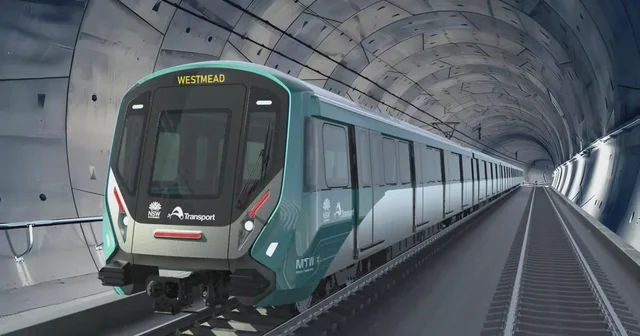
Sydney Metro West Appraisal
My Role
Researcher and Engineering Consultant
Project Type
University Team Engineering Appraisal
University Subject
41200 Engineering Project Appraisal
Tools & Technologies
Systems Thinking · Engineering Ethics · Sustainability Appraisal · Stakeholder Analysis · Project Evaluation
Team Context
University team appraisal of Sydney Metro West.
Overview
The project evaluated Sydney Metro West using a systems-thinking framework.
Rather than judging the project only by transport capacity, schedule or cost, the appraisal examined how infrastructure decisions influence social wellbeing, environmental performance, economic outcomes, ethics and community trust simultaneously.
The work considered intended benefits and less obvious feedback effects, including gentrification, construction disruption, embodied carbon, sustainability claims and Indigenous cultural heritage.
My Contribution
What I owned
As part of the team research effort, my main responsibility was analysing the unintended consequences of Sydney Metro West. I investigated how the project could create secondary effects beyond its intended transport benefits, including gentrification and displacement, construction impacts on nearby communities and businesses, and broader social and environmental consequences. My work contributed to the team’s systems-thinking appraisal by showing how engineering decisions can create interconnected outcomes that are not immediately obvious.
The Challenge
Large infrastructure projects create effects far outside the immediate engineering system.
A decision that improves transport access can increase land value and contribute to displacement. Lower-carbon materials can improve environmental performance while increasing cost or procurement complexity. New public spaces can improve wellbeing while competing with development opportunities.
The challenge was to identify these connections, assess trade-offs and determine what responsible engineering management should do when outcomes affect stakeholders differently.
Constraints
The appraisal considered:
Technical project objectives.
Social impacts.
Environmental impacts.
Economic effects.
Construction disruption.
Lifecycle carbon.
Sustainability claims and evidence.
Aboriginal cultural heritage and genuine engagement.
Engineers Australia professional ethics.
Long-term management.
System & Design Development
How the system took shape
System Architecture
Transport infrastructure
↔ accessibility / travel time
↔ employment / local economy
↔ land value / gentrification
↔ community wellbeing
Construction
↔ material use / embodied carbon
↔ noise / vibration / air quality
↔ local businesses / ecosystems
Governance
↔ sustainability reporting
↔ Aboriginal engagement
↔ ethical decision making
↔ public trust
Design Process
The project established context and identified systems-thinking overlaps:
socio-environmental;
socio-economic;
eco-economic; and
three-dimensional overlaps.
The team analysed trade-offs and unintended outcomes such as gentrification, displacement and construction impacts.
The final stage connected findings to engineering ethics and produced short- and long-term management recommendations.
Key engineering decisions
Evaluate feedback loops, not only direct benefits
Improved accessibility can create economic benefits but can also increase property demand and contribute to gentrification. The appraisal therefore considered second-order effects.
Treat environmental claims as an integrity issue
Sustainability performance depends on transparent baselines, lifecycle accounting and credible evidence. Carbon reporting was linked directly to professional engineering integrity.
Treat Indigenous engagement as decision-shaping
The appraisal supported an Aboriginal cultural lens and Connecting with Country approach that can influence design and delivery rather than symbolic late-stage consultation.
Testing & iteration
This was an analytical appraisal rather than a physical prototype.
Reasoning was tested by comparing project decisions across multiple systems dimensions and asking whether a benefit in one area created a cost or unintended effect elsewhere.
Recommendations were derived from the identified feedback loops and ethical issues.
Final outcome
The project demonstrated a broader form of engineering decision making: not only whether a project is technically achievable, but who benefits, who carries the cost, what secondary effects are created and whether sustainability and engagement claims are supported by responsible practice.
Results & Measurements
The appraisal recommended strong multidisciplinary coordination, transparent sustainability reporting, meaningful Aboriginal stakeholder engagement and long-term social-equity assessment.
Limitations
The appraisal relied on project information and secondary evidence rather than direct access to internal decision making, stakeholder interviews or complete commercial data.
It is an academic systems appraisal, not an independent audit.
Reflection
This project reinforced that engineering decisions sit inside social and environmental systems.
Technical optimisation can create unintended outcomes when surrounding relationships are ignored. It also showed why ethics is not separate from engineering analysis: transparency, engagement and distribution of impacts directly influence whether a technically successful project is also responsible.
Project Links